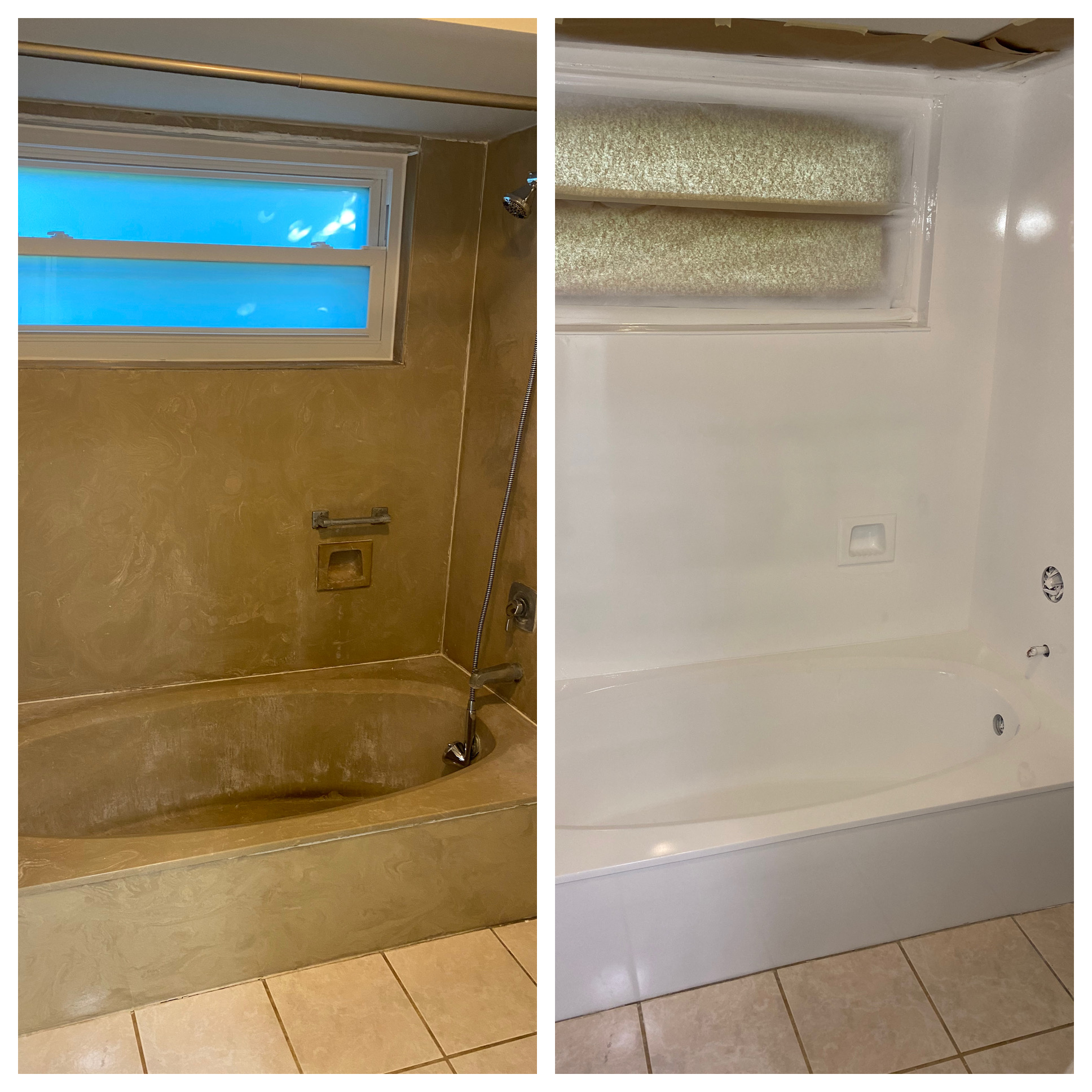
Etching creates the mechanical bond that gives a new bathtub coating something to grip. Primer is the next critical layer: it locks in adhesion, helps unify the etched surface, and gives the final finish the foundation it needs to hold up over time. Skipping primer between etching and the final coat is one of the most common reasons a refinished tub can fail early.
At Glover Refinishing in Jacksonville, FL, surface preparation is never treated as a shortcut. We apply primer after every etch because a durable bathtub refinishing result depends on the entire coating system—not simply the final glossy coat.
Etching Creates Texture, but Primer Completes the Bond
A bathtub’s original surface is designed to be smooth, dense, and easy to clean. Those qualities are great for daily use, but they also make it difficult for a new coating to adhere. Proper etching changes that by microscopically opening and texturing the surface. It creates the mechanical profile the new finish needs to grip.
But texture alone is not the whole answer. After etching, the surface needs an adhesion layer that can connect the prepared tub to the finish applied on top. That is where a professional primer for bathtub refinishing
matters.
Think of etching as preparing the foundation and primer as securing the connection. The etched surface gives the system physical grip; primer helps create a reliable transition from that prepared surface to the polyurethane topcoat. For a closer look at the first half of this process, read Why Etching Matters.
What Primer Does in Plain Language
Primer is not an optional extra coat of paint. It is a purpose-built adhesion layer. Once the tub has been cleaned, etched, rinsed, and properly dried, primer works its way into the microscopic texture created during surface preparation. It helps fill and level that etched profile while bonding chemically to the prepared substrate.
Then, it creates the stable surface the final coating needs to perform correctly. In practical terms, primer helps the high-end polyurethane finish adhere more evenly and reliably across the tub. It is the bridge between the bathtub itself and the new finish you see and use every day.
Without that bridge, a topcoat is being asked to do too much on its own. It may initially look smooth and bright, but appearance on day one is not the same as superior adhesion for a bathtub finish
after repeated hot showers, cleaning, moisture exposure, and normal use.
Why Some Refinishers Skip Primer
Primer takes time, product, and discipline. It adds another application step and requires the refinisher to respect the proper sequence rather than rushing from etching straight to the final coat. That is why it is a step many homeowners never hear about when comparing bathtub refinishing options.
Unfortunately, it is also why some coating jobs can look good immediately yet begin peeling, chipping, or lifting sooner than expected. In Glover Refinishing’s experience, the absence of primer after etching is the second most common cause of early coating failure. The first is inadequate surface preparation overall.
Glover Refinishing applies primer after every etch. It is a core differentiator in our Jacksonville, FL process, even though it is rarely advertised by competitors. We believe customers deserve to understand the work beneath the finish—not just the color and shine visible at the end.
The Glover Refinishing Process, Step by Step
Long-lasting bathtub refinishing is a sequence. Each step supports the one that follows it.
- Assessment: We inspect the bathtub’s material, condition, existing damage, prior coatings, and areas that need repair or special attention.
- Cleaning: Oils, soap residue, mineral buildup, and contaminants must be removed. A clean surface is essential before any adhesion work begins.
- Etching: The surface is professionally etched to create the mechanical profile needed for coating adhesion.
- Primer: Primer is applied after etching to bond with the prepared surface and establish the adhesion layer for the topcoat.
- High-end polyurethane finish: The final finish is applied to create a smooth, durable, refreshed bathtub surface.
This process is why surface preparation gets so much attention at Glover Refinishing. The visible finish is important, but its performance depends on what happens before it is sprayed.
Why a High-End Polyurethane Finish Is the Right Match
Primer and topcoat should work as a system. Glover Refinishing uses a high-end polyurethane finish because it is well suited to the demanding conditions inside a bathroom. Tubs experience regular temperature changes, moisture, cleaning, movement, and everyday contact. A finish needs more than shine; it needs durability and flexibility.
Compared with more rigid epoxy-based options, a quality polyurethane tub finish is better able to accommodate normal expansion, contraction, and use. Compared with acrylic urethane approaches, a high-end polyurethane system is selected for its durable, resilient performance in a wet bathroom environment. The result is a finish designed to look refined while standing up to the realities of daily bathing.
That is why a bathtub refinishing primer cannot be evaluated separately from the final finish. The primer supports the high-end polyurethane finish, and the polyurethane finish protects the primer and prepared surface beneath it. Together, they create a more dependable coating system.
Questions to Ask Before Choosing a Refinisher
If you are researching bathtub refinishing in Jacksonville, FL, ask more than what color will be used or how quickly the job can be completed. Ask how the surface will be prepared. Ask whether the tub will be etched. Most importantly, ask whether primer is applied after etching and before the final finish.
A professional should be able to explain the process clearly. At Glover Refinishing, we welcome those questions because the details matter. Learn more about our team and standards on our About
page, or explore our complete Bathtub Refinishing
service.
FAQ
Is primer necessary after etching a bathtub?
Yes. Etching creates the mechanical profile, while primer creates the adhesion layer that helps the final coating bond and perform as intended.
Can a bathtub be refinished without primer?
A tub can be coated without primer, but skipping it removes an important layer in the adhesion system and increases the risk of premature failure.
Does primer make the bathtub finish last longer?
Properly applied primer supports better adhesion between the etched tub surface and the polyurethane finish, which is essential to long-term performance.
What finish does Glover Refinishing use?
Glover Refinishing uses a high-end polyurethane finish selected for the flexibility and durability needed in bathroom heat and moisture conditions.
How can I get an estimate for bathtub refinishing?
Request a free estimate from Glover Refinishing in Jacksonville, FL through our Contact page. We will help you understand the condition of your bathtub and the process needed to refinish it properly.