Etching is the surface-preparation step that creates a mechanical bond between your bathtub’s existing surface and its new finish. It leaves microscopic texture for the coating to grip, rather than allowing that coating to sit on a surface that is too smooth. Many bathtub refinishing failures can be traced back to this step being skipped—especially when a finish looks great at first but begins peeling weeks or months later.
For homeowners in Jacksonville, FL, comparing contractors for a fall bathroom refresh, the question is simple: does the refinisher properly prepare the surface before applying a new coating? At Glover Refinishing, surface preparation is not an optional extra. We etch every qualifying surface, every time, because preparation is what separates a finish that holds from one that does not.
What Is the Bathtub Refinishing Etching Process?
Most tubs have a hard, smooth surface. Whether that surface is porcelain, ceramic tile, fiberglass, acrylic, or a previously coated finish, it may appear clean and ready for a new coating long before it is actually ready to bond with one.
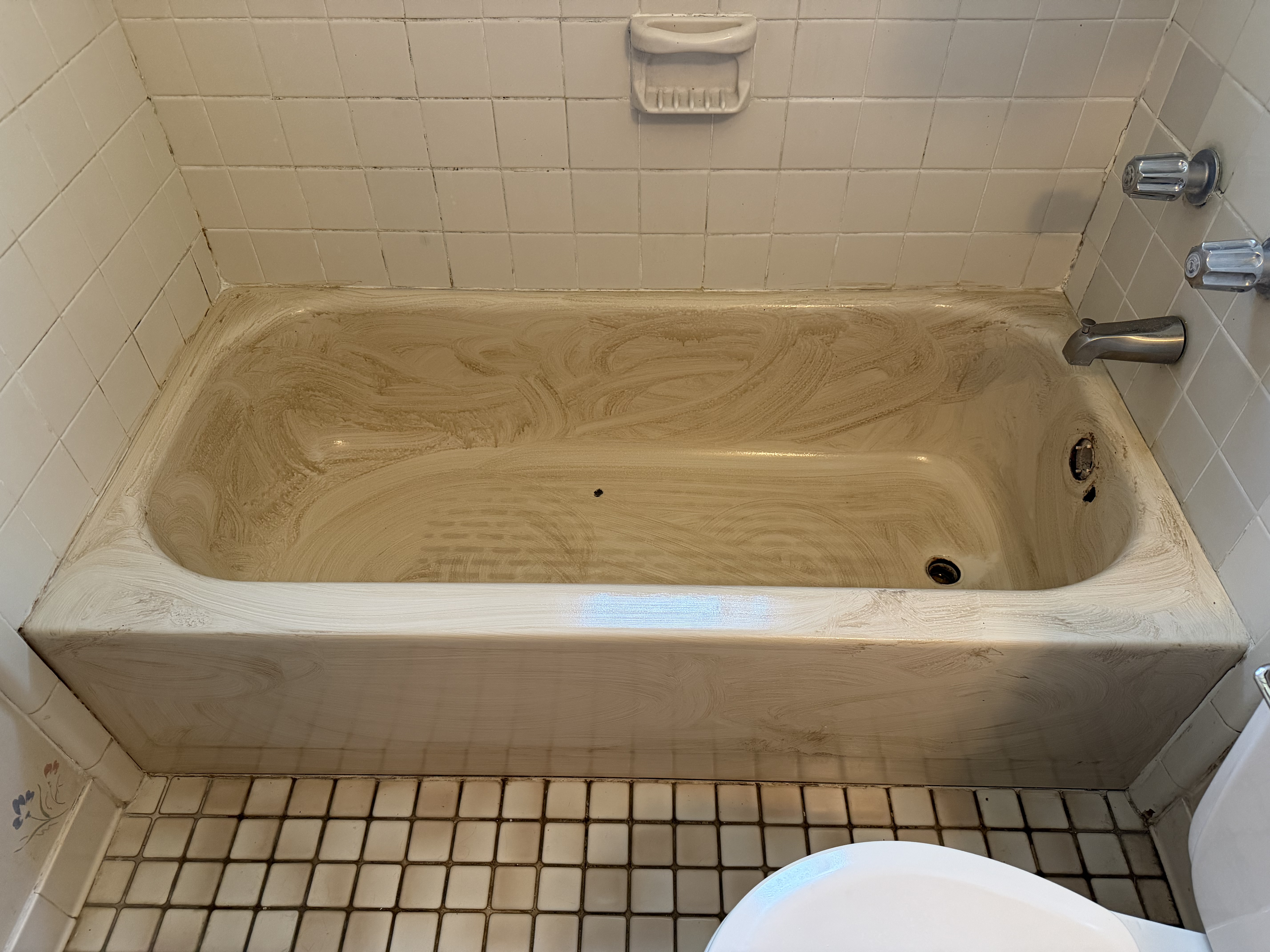
The bathtub refinishing etching process uses an appropriate etching material to create an extremely fine texture across a qualifying surface. You generally cannot see this texture from across the room, and it does not make the tub look rough. Think of it as creating thousands of tiny anchor points. The new finish can flow over the surface, settle into that microscopic texture, and form a much stronger mechanical connection.
Without etching, a coating may be applied over a surface that is still essentially slick. It can look smooth, bright, and uniform when the job is complete, but it has little to hold onto. Normal use, cleaning, water exposure, temperature changes, and everyday expansion and contraction can eventually cause the finish to release.
Why Bathtub Finish Peels After a Refinish
When homeowners ask why bathtub finish peels, they often assume the coating itself was defective. Sometimes materials matter, but the more common issue is the bond underneath the coating. A high-quality coating cannot reliably compensate for a surface that was not prepared correctly.
Peeling may start around a drain, a repair area, a corner, or a spot exposed to frequent water. It can also begin as a small chip or lifted edge that grows as moisture works beneath the coating. In many cases, the visible failure is only the final symptom. The real problem happened earlier, during bathtub preparation.
Proper surface etching for refinishing is especially important when a prior coating has failed. Glover Refinishing evaluates the tub’s condition, addresses damage when needed, and follows the preparation steps appropriate for the surface before refinishing. If a tub needs repair before it can be coated, our Repairs
service helps address chips, cracks, and other issues that could affect the finished result.
Why Some Refinishers Skip Etching
Etching is not a glamorous step. It can add approximately 30 to 60 minutes to a job, requires additional materials, and demands careful handling. More importantly, it does not produce a dramatic visual change at the moment it is completed. To an untrained eye, the tub may look almost identical immediately before and after etching.
That creates an unfortunate temptation for rushed or low-cost refinishing work. If a contractor is focused on finishing as quickly as possible, they may reduce the time spent on surface preparation because the consequences are delayed. The bathtub can look excellent on the day of service, while the lack of bond only becomes evident weeks or months later.
This is why price alone is not a reliable way to compare a refinishing quote. A lower price may reflect fewer preparation steps, not the same process delivered more efficiently. Ask what is included, how the surface is prepared, and what the contractor does to promote adhesion before coating begins.
Etching Before Coating Is Only One Part of Proper Preparation
Etching before coating is a critical part of the proper bathtub refinishing process, but it works alongside other preparation steps. The surface must be thoroughly cleaned, contaminants must be removed, problem areas must be repaired, and the tub must be prepared so each layer can perform as intended.
After etching, the next layers matter too. Primer can help build on the mechanical bond created during preparation and support a durable finished system. Learn more about that relationship in Why Primer Matters After Etching.
At Glover Refinishing, we approach bathtub preparation as a system rather than a shortcut. Each qualifying surface is etched before coating because a long-lasting result depends on what happens before the visible finish is sprayed. You can also explore our Bathtub Refinishing
service to see how refinishing can update a worn or dated tub without the disruption of replacement.
What to Ask a Refinisher Before You Hire Them
Homeowners who have had a poor prior refinishing experience often wish they had known which questions to ask. The most important question is direct: “Do you etch the surface before refinishing?”
A qualified refinisher should be able to explain their surface-preparation process plainly, including whether your particular tub surface qualifies for etching and how they ensure the coating bonds correctly. Be cautious if the answer is vague, if the contractor only emphasizes how the tub will look when finished, or if they promise a very fast turnaround without discussing preparation.
- What cleaning and decontamination steps do you perform?
- Do you etch the surface before refinishing?
- How do you handle chips, cracks, or previous coating failures?
- What primer or bonding layers do you use after preparation?
- What curing and care instructions will I receive after the job?
These questions help you compare process, not just appearance. In Jacksonville, FL, Glover Refinishing is happy to explain the preparation behind the finish so you know what you are paying for and why it matters.
FAQ
Can a bathtub look good without being etched?
Yes. A freshly applied coating can look excellent immediately even if the underlying surface was not properly prepared. The difference often appears later, when the coating begins to chip, peel, or release.
Does etching damage my bathtub?
When performed correctly on a qualifying surface, etching is a controlled preparation step designed to create microscopic texture for adhesion. It is not intended to create visible damage or leave the tub looking rough.
Is etching needed if the bathtub is cleaned thoroughly?
Cleaning removes soap residue, body oils, mineral deposits, and other contaminants. Etching serves a different purpose: it creates the surface profile needed for mechanical bonding. Both are important parts of proper bathtub preparation.
Can peeling bathtub refinishing be repaired?
It depends on the extent and cause of the failure. Localized damage may be repairable, while widespread peeling may require more extensive preparation and refinishing. Glover Refinishing can assess the condition and recommend an appropriate path forward.
How do I get an estimate for bathtub refinishing in Jacksonville?
Reach out to Contact
Glover Refinishing to request a free estimate. We will help you understand the condition of your tub, the preparation it needs, and what to expect from the refinishing process.
A bathtub finish should do more than look good on the day it is applied. It should be built on thoughtful surface preparation that gives the new coating something to hold onto. If you are planning a bathroom refresh or replacing a peeling prior finish, contact Glover Refinishing today to request your free estimate.