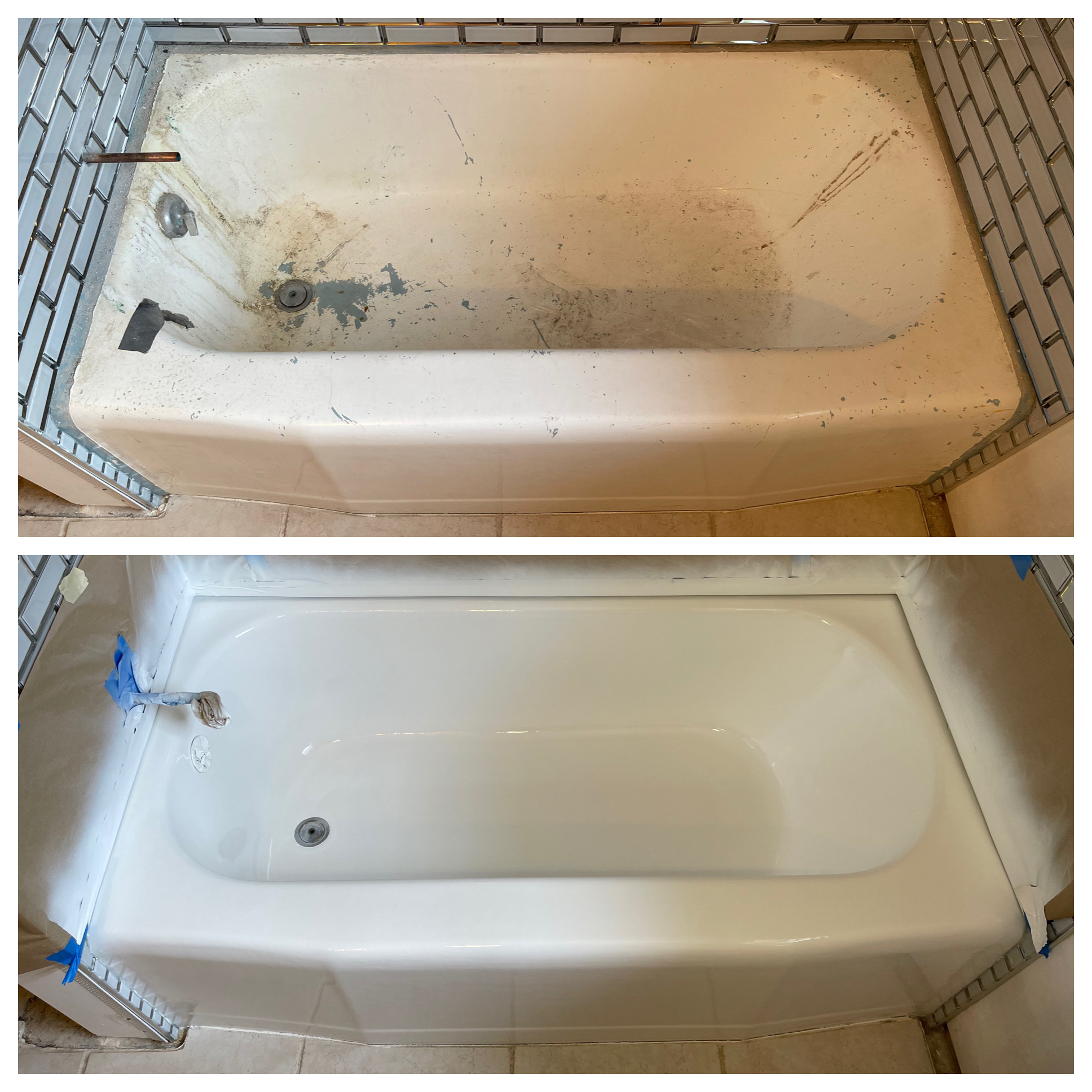
Bathtub coating failure—peeling, bubbling, lifting, or chipping—almost always comes back to preparation. In most cases, the surface was not properly etched, primed, cleaned, or conditioned before the finish was applied. A bathtub can look fine immediately after refinishing, then begin to fail weeks or months later when moisture, heat, and everyday use expose a weak bond.
For homeowners in Jacksonville, FL, this can be especially frustrating after a hot, humid summer. Glover Refinishing helps identify the cause of surface repair problems and recommends the right path to restore a bathtub before minor coating damage spreads.
Bathtub Peeling and Bubbling Is Usually a Bonding Problem
A refinished bathtub is only as durable as the bond between the original tub surface and the new coating. The finish is not simply paint applied over an existing surface; it is a system that depends on careful preparation and compatible materials.
When that system is incomplete, the coating may initially appear smooth, glossy, and fully cured. Later, water exposure, cleaning, body oils, bath products, and normal expansion and contraction can reveal the underlying bathtub coating failure. What looks like a small bubble or loose edge may be the first sign that the coating never fully adhered to the tub.
A professional assessment from Glover Refinishing can help distinguish a localized defect from a widespread failure. That matters because a small repair may be possible in some cases, while other tubs need more extensive surface repair to prevent recurring problems.
Skipped Etching: No Mechanical Bond for the New Finish
One of the most common answers to why does bathtub refinishing peel
is skipped or inadequate etching. Many bathtub surfaces are naturally smooth and nonporous. Without etching, a new finish has very little texture to grip.
Proper etching creates a microscopic profile in the existing surface. This gives the coating a mechanical bond instead of relying only on surface-level adhesion. If the tub was lightly scuffed, rushed through preparation, or coated over a slick original finish, peeling may begin at high-contact areas such as the bottom of the tub, corners, or edges around the drain.
Peeling caused by poor etching often starts as a thin edge that can be lifted with a fingernail. Once water works underneath, the damaged area can grow quickly. Learn more about the preparation process in Why Etching Matters.
Skipped Primer: The Missing Adhesion Layer
Primer is not an optional shortcut in a quality refinishing process. It is the adhesion layer that helps connect the prepared bathtub surface to the final topcoat. When primer is skipped, improperly applied, or allowed to cure incorrectly, the finish may separate from the tub rather than failing within the coating itself.
This issue can cause coating to lift in larger sheets or patches. Homeowners may notice the center of the tub looking loose, soft, or slightly raised even when the edges appear intact. In some cases, pressing on the area can reveal movement beneath the finish.
A missing or failed primer layer is often associated with a bad refinishing job because the tub may have looked excellent on day one. The problem develops after the coating has been stressed by warm water, routine cleaning, and repeated use. Glover Refinishing evaluates these layers carefully when determining the right repair approach.
Wrong Finish Material Can Lead to Early Failure
Not all refinishing materials perform the same way. Epoxy and acrylic urethane products may be used in some coating applications, but they do not offer the same performance characteristics as a true polyurethane finish when the goal is a durable bathtub surface.
The wrong material can become brittle, lose flexibility, discolor, chip more easily, or break down under repeated exposure to water and cleaning products. A coating that cannot handle the demands of a bathtub may begin to crack or chip, particularly on the floor where people stand or near the drain where water regularly collects.
This does not mean every epoxy or acrylic urethane application will immediately fail. It does mean material selection matters. A proper surface repair plan should account for the tub’s existing condition, prior coatings, and the finish system needed for long-term adhesion and durability.
Contamination Before Coating Prevents Proper Adhesion
A bathtub must be thoroughly cleaned before any coating is applied. Soap residue, silicone, waxes, oils, hard-water deposits, mildew treatments, and even residue from certain household cleaners can interfere with adhesion.
Silicone is a particularly serious concern. It may be present around caulk lines or left behind by cleaning products, and it can cause the new finish to pull away, fisheye, or bubble. Oils and soap film can produce similar results by creating a barrier between the prepared surface and the coating.
When contamination is the cause, failure can appear uneven. One part of the bathtub may remain intact while another area peels, chips, or lifts. This is why a professional should inspect the full surface instead of simply applying more material over the visible damage.
Humidity and Temperature During Application Matter
Jacksonville’s climate can create difficult refinishing conditions, especially when humidity is high or temperatures are outside the ideal range. A coating applied in excessive humidity may trap moisture, cure improperly, or develop adhesion problems that do not become obvious until later.
Temperature also affects how a finish flows, flashes, and cures. If conditions are too hot, too cold, or inconsistent, the coating may not form the strong, even bond it needs. Florida heat can then accelerate failure in a poorly prepared or improperly cured finish.
This is one reason post-summer is a common time for homeowners to notice peeling and bubbling. The tub may have endured months of heat, humidity, frequent showers, and standing water. Those conditions do not necessarily cause a properly refinished bathtub to fail, but they can expose preparation mistakes quickly.
What the Symptoms of Coating Failure Look Like
Different symptoms can point to different underlying problems, although only an inspection can confirm the cause:
- Peeling at edges: Often begins around corners, overflow openings, caulk lines, or the tub rim where adhesion was weak or moisture found a pathway beneath the coating.
- Lifting in the center: May indicate broad adhesion loss, missed primer, or inadequate surface preparation beneath a large area.
- Bubbling near the drain area: Can result from standing water, moisture intrusion, contamination, or a weak bond in a heavily used section of the tub.
- Chipping: May point to a brittle finish material, impact damage, or a coating system that was not properly bonded to the original surface.
Ignoring these signs can allow water to move under more of the coating. A small bubble today can turn into a much larger peeling area, making the eventual repair more involved.
What to Do About a Peeling Bathtub in Jacksonville, FL
Do not keep picking at a loose edge or try to cover bubbling with touch-up paint. Those temporary fixes can trap moisture, create uneven texture, and make future surface repair more difficult. Avoid harsh abrasives and aggressive cleaners that can accelerate the damage.
Instead, schedule a professional assessment before the problem gets worse. Glover Refinishing can evaluate whether the issue is isolated, whether an earlier coating is failing, and what repairs are appropriate for the condition of your bathtub. Visit Repairs
to learn about available options, or use the Contact
page to request a free assessment in Jacksonville, FL.
FAQ
Can a peeling bathtub coating be repaired?
Sometimes. The right solution depends on how extensive the adhesion failure is and whether moisture has traveled beneath the surrounding coating. A professional inspection is the best way to determine whether a targeted repair or more comprehensive refinishing is needed.
Why is my bathtub bubbling near the drain?
The drain area experiences frequent standing water and heavy use. Bubbling there can indicate moisture intrusion, contamination, inadequate preparation, or a coating that did not properly bond.
How soon can a bad refinishing job start to peel?
It may look correct immediately and fail later. Peeling can begin within weeks or take months to appear, depending on the preparation errors, material used, humidity, temperature, and level of use.
Will cleaning products cause bathtub coating failure?
Harsh or abrasive cleaners can damage an already weak coating, but they are often not the original cause. In many cases, the underlying problem is poor adhesion from skipped etching, missing primer, contamination, or an incompatible finish material.
Should I wait before addressing bathtub peeling and bubbling?
No. Once the coating begins to lift, water can reach the area beneath it and spread the failure. Contact Glover Refinishing for a free professional assessment and timely surface repair in Jacksonville, FL.