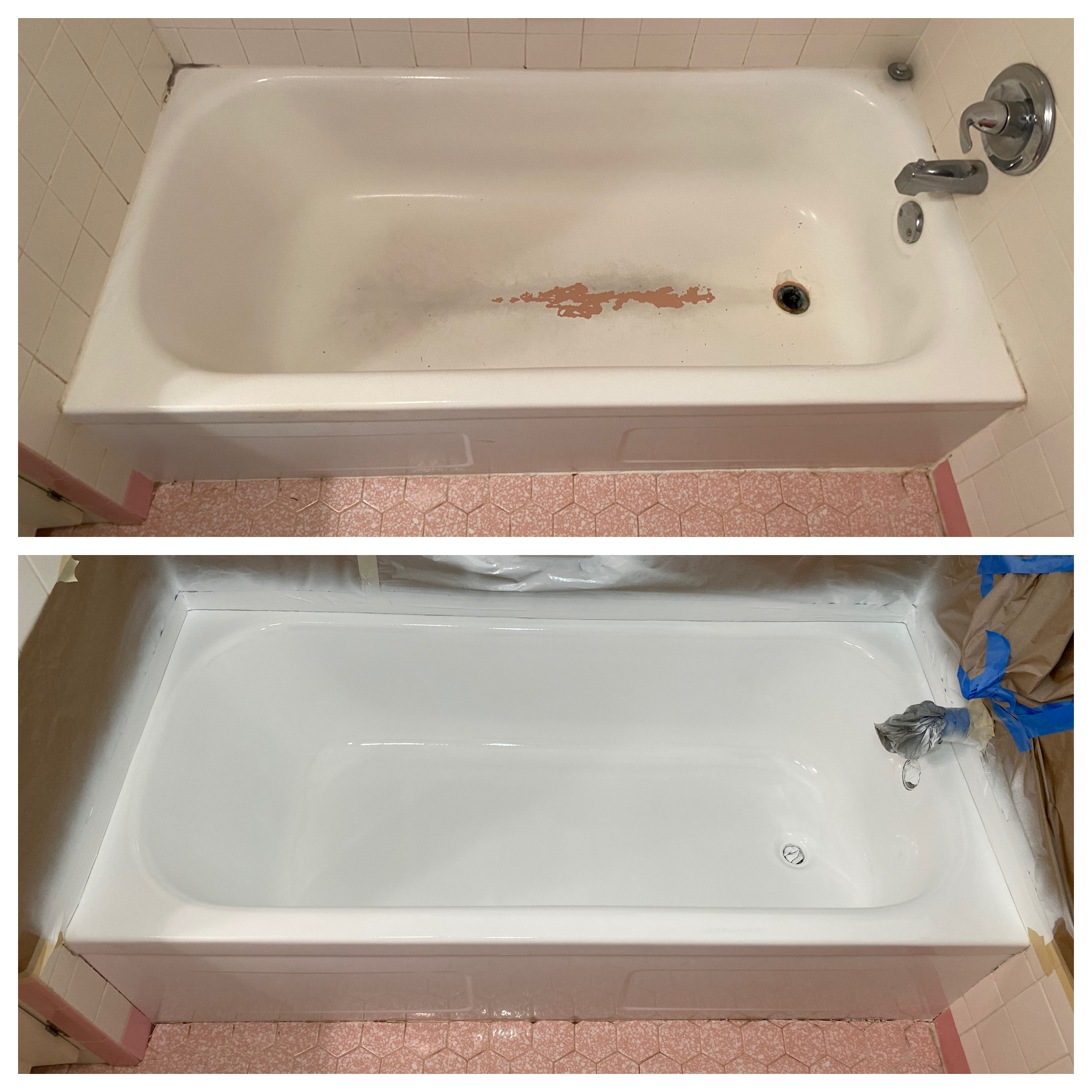
A peeling bathtub finish almost always points to skipped preparation—most often inadequate cleaning, missing etching, or no primer before the coating was applied. The right fix depends on how widespread the failure is: a small isolated chip may be repairable, while broad peeling usually calls for correcting the surface properly before a new finish is applied.
For homeowners in Jacksonville, FL, Glover Refinishing provides professional surface repair and bathtub refinishing solutions designed to address the underlying bond failure rather than simply cover it up.
Why Is My Bathtub Coating Peeling Off?
A bathtub coating is only as durable as the bond between the tub and the finish. When that bond fails, the coating may lift at the drain, along the bottom of the tub, near the soap dish, or in large sheets along the sides. It can look like paint peeling from a wall, but the cause began long before the peeling became visible.
The most common reason is poor surface preparation. Before a bathtub can be refinished successfully, it must be thoroughly cleaned to remove soap residue, body oils, minerals, silicone, and cleaning-product buildup. Even small amounts of contamination can interfere with adhesion.
Next, the existing surface needs to be etched. Etching creates the texture needed for a new coating to grip the tub rather than sit on top of a slick surface. Primer is also critical. A compatible primer creates an additional bonding layer between the prepared tub and the final finish. When cleaning, etching, or priming is skipped or rushed, bathtub coating peeling off is often the result.
At Glover Refinishing, we emphasize that the process matters more than the price. A finish may initially look bright and smooth, but appearance on day one is not the same as long-term adhesion.
Can a Peeling Bathtub Be Fixed?
In many cases, yes. A peeling bathtub does not automatically mean you need a new tub. The practical answer depends on how far the failure has progressed and what is underneath the failing finish.
If there is a single small chip or a tight, isolated area of damage, a bathtub chip repair or localized surface repair may be appropriate. The damaged section can be evaluated, stabilized, prepared, and repaired so it blends as closely as possible with the surrounding finish.
However, if the coating is lifting in multiple areas, feels loose around the edges, bubbles when wet, or continues to peel after cleaning, a spot repair may not be a lasting solution. Those symptoms often indicate that the original coating did not bond correctly across a larger portion of the tub. In that situation, resurfacing over the loose material would only hide the issue temporarily.
Why DIY Peeling Bathtub Repairs Often Do Not Last
It is understandable to want a quick fix when a bathtub finish starts to peel. Retail touch-up kits, brush-on coatings, and patch products can make a chipped area look better for a short time. But DIY attempts usually address the visible damage without resolving the adhesion problem underneath.
For example, applying a patch over a coating that is already separating from the tub does not restore the failed bond. Water, moisture, everyday cleaning, and normal expansion can continue working under the edges. The new patch may then crack, discolor, or peel along with the old coating.
A DIY repair can be useful for a very minor cosmetic mark on a sound, professionally prepared surface. It is less effective when the tub has a bad refinishing job with broad coating failure. If peeling is spreading, the better investment is an assessment of the entire finish rather than repeated patching.
What Professional Bathtub Peeling Repair Involves
A professional bathtub peeling repair starts with determining the scope of the failure. Glover Refinishing assesses whether the coating is failing only in a limited area or whether the finish needs to be removed and rebuilt. This distinction helps homeowners avoid paying for a patch when a more complete correction is necessary.
When the failure is extensive, the proper process may include stripping the unstable coating, thoroughly cleaning the substrate, etching the surface, applying the correct primer, and reapplying a high-end polyurethane finish. Each step has a purpose. Cleaning removes contaminants; etching provides a mechanical bond; primer supports adhesion; and the final polyurethane finish delivers the smooth, durable appearance homeowners expect.
This approach is different from simply applying another coating over the old one. If the first layer is loose, any new material applied on top is relying on a weak foundation. Proper surface repair focuses on the tub itself and the condition of every layer between the tub and the finished surface.
For smaller concerns, visit Glover Refinishing’s Repairs
page to learn more about targeted repair options. For a broader restoration, explore Bathtub Refinishing
services.
When Refinishing Makes Sense—and When Replacement May Be Better
Refinishing is often an excellent option for a structurally sound bathtub with a failed cosmetic coating. It can restore the appearance of the tub without the demolition, plumbing work, tile disruption, and replacement cost that can come with installing a new bathtub.
Replacement may make more sense if the tub itself has major structural damage, severe rust-through, significant cracking, or other issues that cannot be reliably corrected through surface repair. But peeling alone is not enough to make that decision. A professional assessment can determine whether the existing tub is a good candidate for correction.
Jacksonville, FL homeowners should also keep in mind that heat and humidity can make poor adhesion problems more noticeable, especially during summer. A coating that was inadequately prepared may begin lifting faster as the bathroom environment cycles through moisture and temperature changes.
How to Care for a Newly Corrected Bathtub Finish
Once a bathtub has been repaired or refinished correctly, gentle maintenance helps protect the finish. Use nonabrasive cleaning products, soft sponges or cloths, and regular rinsing to reduce soap and mineral buildup. Avoid harsh scouring powders, abrasive pads, and products that can scratch or dull the surface.
It is also wise to address dripping faucets and standing water promptly. Good care will not compensate for a poor refinishing process, but it will help preserve a finish that has been properly cleaned, etched, primed, and applied.
FAQ
Can I paint over a peeling bathtub finish?
Painting or recoating directly over peeling material is rarely a dependable fix. The loose coating must be assessed and corrected first, or the new layer may peel with it.
Is a small bathtub chip repair enough?
It can be, if the damage is isolated and the surrounding coating is firmly bonded. If multiple areas are lifting, a small repair may only delay a more complete correction.
How do I know whether my tub needs stripping?
Large peeling areas, loose edges, bubbling, recurring chips, or coating failure in several locations can indicate that stripping is needed. A professional evaluation is the best way to determine the appropriate scope of work.
Will bathtub refinishing look like a new tub?
A professionally applied finish can dramatically improve the appearance of a worn or failed bathtub. Results depend on the tub’s condition and the extent of required surface repair, but proper preparation is essential to both appearance and durability.
Do I need to replace my bathtub if the coating is peeling?
Not necessarily. Many tubs with peeling finishes can be restored if the underlying tub is structurally sound. Glover Refinishing can help Jacksonville, FL homeowners determine whether repair, refinishing, or replacement is the most sensible path.
If your bathtub finish is peeling, do not settle for another temporary cover-up. Contact Glover Refinishing or call 904-748-0666 for a free assessment and a professional recommendation for your bathtub.