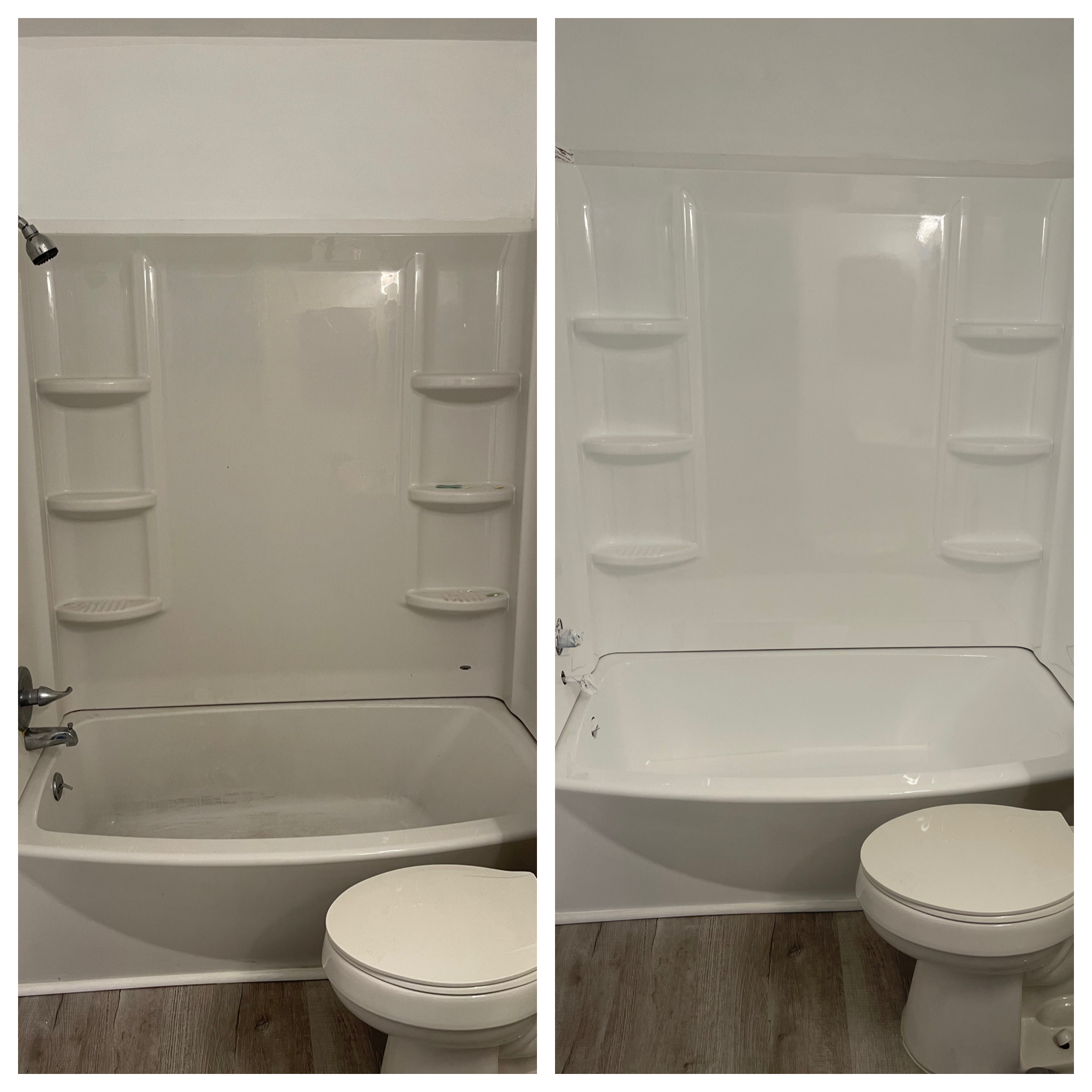
Yes—fiberglass bathtubs and shower surrounds are good candidates for refinishing when the right preparation process is used. The key difference is that fiberglass requires sanding rather than chemical etching, creating the surface texture needed for a durable new coating to bond. Glover Refinishing uses this process regularly on fiberglass units throughout Jacksonville, FL, and Northeast Florida.
If your fiberglass shower unit looks yellowed, worn, scratched, or dated before holiday guests arrive, replacement is not your only option. Professional fiberglass tub and shower refinishing can restore a cleaner, brighter appearance without the demolition, disruption, and expense of a full bathroom renovation.
What Is a Fiberglass Shower Unit?
Fiberglass is a lightweight molded material commonly used for tubs, shower stalls, and combination tub-and-shower units. It is especially common in Florida homes, condos, rental properties, and manufactured housing because it is practical, affordable, and available in many one-piece and multi-piece configurations.
A one-piece fiberglass unit is molded as a single tub-and-shower surround. Multi-piece units may include a separate bathtub, wall panels, or shower base. Both can often be candidates for Fiberglass Shower Unit Refinishing
when the structure is sound and the surface damage is primarily cosmetic.
Can Fiberglass Bathtubs Be Refinished?
Yes. Homeowners often ask, “Can fiberglass bathtubs be refinished?” because they assume resurfacing only works on porcelain or cast-iron fixtures. In reality, fiberglass resurfacing is a proven option for many worn tubs and shower surrounds.
The condition of the unit matters. Refinishing is generally most appropriate when the fiberglass is stable and intact but has lost its finish. A professional assessment can identify whether a unit has repairable surface issues or whether more serious structural damage, such as extensive cracking or flexing, should be addressed first.
Why Fiberglass Requires Sanding Instead of Chemical Etching
Porcelain and some other hard bathroom surfaces can be prepared using chemical etching because their surface profile responds well to that method. Fiberglass has a different material profile, including a gel-coat surface that needs a mechanical bond rather than an etched one.
For fiberglass shower refinishing, the surface is carefully sanded to remove deterioration and create the correct texture for the coating system to adhere. This preparation step is not simply cosmetic. It is the foundation of a finish that looks smooth, even, and refreshed while bonding properly to the fiberglass beneath it.
At Glover Refinishing, the preparation process is matched to the material—not treated as a one-size-fits-all approach. That is particularly important for fiberglass unit refinishing in Jacksonville, where many residential and rental bathrooms include these molded fixtures.
Common Signs Your Fiberglass Unit Needs Refinishing
Fiberglass does not have to be broken to look worn out. Over time, daily use, cleaning products, sunlight, hard water, and general wear can leave a tub or shower surround looking older than the rest of the bathroom. Common signs it may be time to consider fiberglass tub refinishing include:
- Dulling: The original sheen has faded, leaving the unit looking chalky or flat.
- Yellowing: White fiberglass can develop a yellow or cream-toned appearance as the top gel-coat layer ages.
- Surface scratches: Fine scratches can make the surface appear worn and can collect dirt visually.
- Discoloration: Stains, uneven color, and mineral buildup can remain visible even after routine cleaning.
- Fading: The original color may look inconsistent across the tub, shower base, or surrounding walls.
These issues can make an otherwise functional bathroom feel neglected—especially when you are preparing your Jacksonville home for visitors, listing it for sale, or refreshing a rental between tenants.
Is Yellowing on Fiberglass Correctable?
In many cases, yes. Yellowing is one of the most common reasons homeowners seek fiberglass shower stall refinishing. The discoloration often develops in the degraded outer gel-coat layer, rather than representing a permanent problem throughout the entire unit.
Proper sanding removes that worn surface layer as part of the preparation process. Once the unit is cleaned, repaired as needed, sanded, and professionally coated, the result can be a much brighter and more consistent appearance. Refinishing offers an opportunity to update a yellowed fiberglass tub or shower surround without taking on a full replacement project.
Fiberglass Refinishing vs. Replacing the Unit
Replacing a fiberglass tub or shower unit can sound straightforward, but it frequently turns into a larger renovation. Because many units are installed against finished walls or integrated into tight bathroom layouts, removal may require demolition of wall materials, plumbing adjustments, tile work, flooring repairs, and repainting.
That disruption can be inconvenient at any time of year, and it is especially unwelcome during a pre-holiday home refresh. Fiberglass resurfacing can often provide a more efficient alternative when the existing unit remains functional. Instead of removing the fixture, Glover Refinishing restores the visible surface in place.
Replacement may be appropriate for units with major structural failure, extensive water damage behind the surround, or severe deterioration that cannot be reliably repaired. For cosmetic wear, however, refinishing can help preserve the existing fixture while avoiding much of the mess and cost associated with demolition.
What Results Can You Expect From Fiberglass Shower Refinishing?
A professionally refinished fiberglass unit can look cleaner, smoother, and more uniform than a faded or yellowed original surface. It can also help the entire bathroom feel more current without changing the room’s layout. This makes fiberglass shower refinishing a practical choice for homeowners, landlords, property managers, and anyone preparing a bathroom for guests.
The best outcome begins with realistic evaluation and careful preparation. The team at Glover Refinishing can review the condition of your fiberglass bathtub or shower surround and recommend whether refinishing is the right next step. For examples of restored bathroom surfaces, visit Our Work.
FAQ
Can a fiberglass shower stall be resurfaced?
Yes. A fiberglass shower stall can often be resurfaced when it is structurally sound and the primary concerns are cosmetic, such as dullness, yellowing, scratches, fading, or discoloration.
How is fiberglass tub refinishing different from porcelain refinishing?
The main difference is surface preparation. Fiberglass requires sanding to create the proper mechanical bond for the coating, while porcelain surfaces may be prepared with chemical etching.
Will refinishing remove yellow stains from fiberglass?
Yellowing can often be corrected because sanding removes the degraded gel-coat layer that contributes to the discolored appearance before the new coating is applied.
Is refinishing less disruptive than replacing a fiberglass shower unit?
Usually, yes. Refinishing restores the existing unit in place, while replacement may involve demolition, plumbing work, wall repairs, and other renovation tasks.
How do I know whether my fiberglass unit can be refinished?
A professional evaluation is the best way to determine whether the damage is cosmetic and repairable. Glover Refinishing serves Jacksonville, FL, and Northeast Florida homeowners with straightforward recommendations for fiberglass tub and shower refinishing.
Ready to refresh a worn fiberglass bathtub or shower surround before the holidays? Contact Glover Refinishing today to request your free estimate.